Gildan 18000 White Mockup
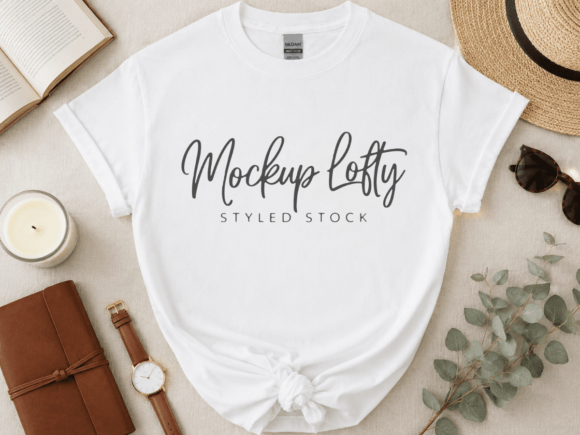
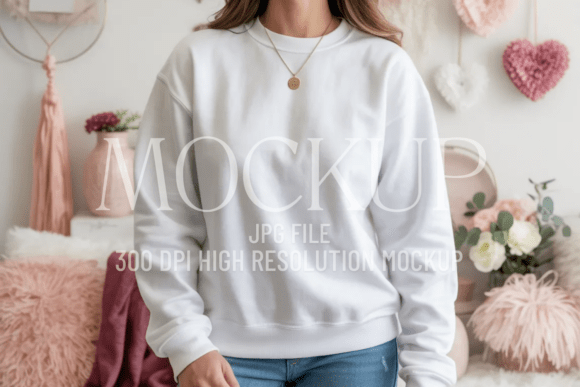
The Gildan 18000 White Mockup is a high-fidelity, no-frills presentation tool designed for creators who need to show their designs in context—without distraction, delay, or technical overhead. It’s not a design tool, template library, or editing suite. It’s a precise visual container: a clean, studio-lit representation of the Gildan 18000 unisex white t-shirt, rendered at 300 DPI in JPG format, with zero text, watermarks, or overlays. Its purpose is singular—to let your artwork, branding, or messaging occupy center stage while grounding it in real-world proportion, texture, and wearability.
This mockup fits most naturally into the presentation and validation phase of a creative or business workflow—not before ideation, and not after final delivery, but right where perception meets credibility. Think of it as the bridge between a flat design file and how a client, customer, or stakeholder will actually experience it. Whether you’re finalizing a logo refresh for a local café, prepping social media assets for an online course launch, or building a portfolio for freelance pitch decks, the Gildan 18000 White Mockup helps you move from “this looks good on screen” to “this looks ready to sell.”
It works best when used intentionally—not as a decorative afterthought, but as part of a deliberate output strategy. For example, a small business owner preparing a product catalog might use the mockup to preview how a quote-based design translates onto apparel before ordering samples. A graphic designer pitching rebranding concepts can embed multiple versions of the same layout across consistent mockups (including the Gildan 18000 White Mockup) to demonstrate versatility without visual noise. An educator creating printable classroom posters can drop their typography-heavy layout into this mockup to assess readability and hierarchy at actual garment scale—something a standard artboard view won’t reveal.
Compatibility is straightforward: because it’s delivered as a high-resolution JPG with a smartly placed, well-defined smart object layer (in compatible software), it integrates cleanly with Adobe Photoshop, Affinity Photo, and other layer-aware editors. No plugins, scripts, or third-party add-ons are required. If you're working in Figma or Canva, you can still use it—just place your design over the shirt area using alignment guides and opacity adjustments to match lighting and perspective. The key is preserving the mockup’s neutrality: avoid cropping, rotating, or applying filters that compromise its clean, minimal aesthetic. That consistency is what makes it reliable across projects and platforms.
Preparation matters more than many assume. Before dropping your design into the Gildan 18000 White Mockup, confirm your source file matches the embedded placeholder dimensions (typically 3000×3000 px or similar). Align critical elements—logos, headlines, focal graphics—within the central print area, keeping in mind standard chest or full-front placements. Use soft shadows or subtle blending modes only if they reinforce realism; over-processing defeats the purpose of a “premium minimal” presentation. And always preview at 100% zoom: what reads clearly at 25% may vanish on mobile feeds or printed swatches.
Usability extends beyond technical fit—it’s about workflow rhythm. Many users batch-process mockups: they finalize five design variations, then drop each one into the same Gildan 18000 White Mockup file, saving outputs with clear naming (e.g., BrandX_Logo_Chest_v3_G18000.jpg). This builds visual continuity across deliverables and reduces decision fatigue during client reviews. Others use it as a quality checkpoint: if a layout feels unbalanced or overly dense inside the mockup, it’s a signal to simplify—not just for apparel, but across all touchpoints. The mockup doesn’t lie. It reveals spacing issues, contrast problems, and typographic missteps faster than any style guide.
Long-term use benefits from light organization. Store the original JPG in a dedicated “Mockups/Master Files” folder, separate from edited exports. Tag or rename derivative files with project names and dates—not just “mockup_final,” but “CafeNova_Merch_Preview_20240522.” This supports version control, especially when iterating with teams or returning to past work. Over time, having a consistent set of mockups—including the Gildan 18000 White Mockup—creates a recognizable visual language for your brand or service. Clients begin to associate that clean, confident presentation with your attention to detail and execution discipline.
Efficiency gains compound quietly. Once you’ve used the Gildan 18000 White Mockup three or four times, you’ll notice shorter feedback loops: fewer rounds of “Can we see it bigger?” or “Does this look okay on fabric?” You’ll also spend less time explaining context—because the mockup shows it. That saves minutes per asset, hours per campaign, and days per quarter. More importantly, it shifts conversations from aesthetics to impact: “How does this support our message?” instead of “What font should we use?”
Integration with other resources happens organically. Pair it with color palettes tested against real garment dye behavior—not just RGB values. Use it alongside typography systems that prioritize legibility at 12–16 inches (typical viewing distance for apparel). When sourcing fonts or icons, ask: “Will this hold up when scaled down and placed over textured cotton?” The Gildan 18000 White Mockup surfaces those questions early. It also pairs well with analytics tools: if you’re A/B testing social posts, using the same mockup across variants isolates design performance—not presentation inconsistency—as the variable.
Quality control starts here. Because the mockup includes no text or branding, it forces focus on composition, contrast, and clarity. If your design disappears into the collar seam or gets lost near the hem, it’s not the mockup’s fault—it’s a sign the layout needs refinement. Likewise, if your brand colors shift unexpectedly under the mockup’s lighting, revisit your export settings or color profile (sRGB is safest for web use). These aren’t obstacles—they’re built-in diagnostics.
For educators and content creators, the Gildan 18000 White Mockup serves double duty: as a teaching aid (demonstrating print placement, scale, and context) and as a production asset (showcasing student work or workshop outcomes professionally). Bloggers documenting a DIY merch process can use it to compare hand-drawn sketches vs. vector finals side-by-side—same mockup, different stages. Freelancers bundling deliverables can include both raw design files and mockup previews, giving clients immediate visual confidence without requiring design software literacy.
None of this requires advanced skill—just intention. You don’t need to master masking techniques to get value. Start by opening the JPG, placing your design in the designated area, adjusting opacity slightly if needed to match lighting, and exporting. Refine later. What matters is beginning with a tool that respects your time, honors your design, and communicates competence before a single word is read.
The Gildan 18000 White Mockup isn’t about making things look “pretty.” It’s about removing ambiguity. It’s about aligning expectation with execution. And in workflows where trust, clarity, and speed matter—from first pitch to final shipment—it’s often the quietest, most effective step you’ll take.